Google’s newest source of power for AI is almost fifty years old. That’s exactly the point.
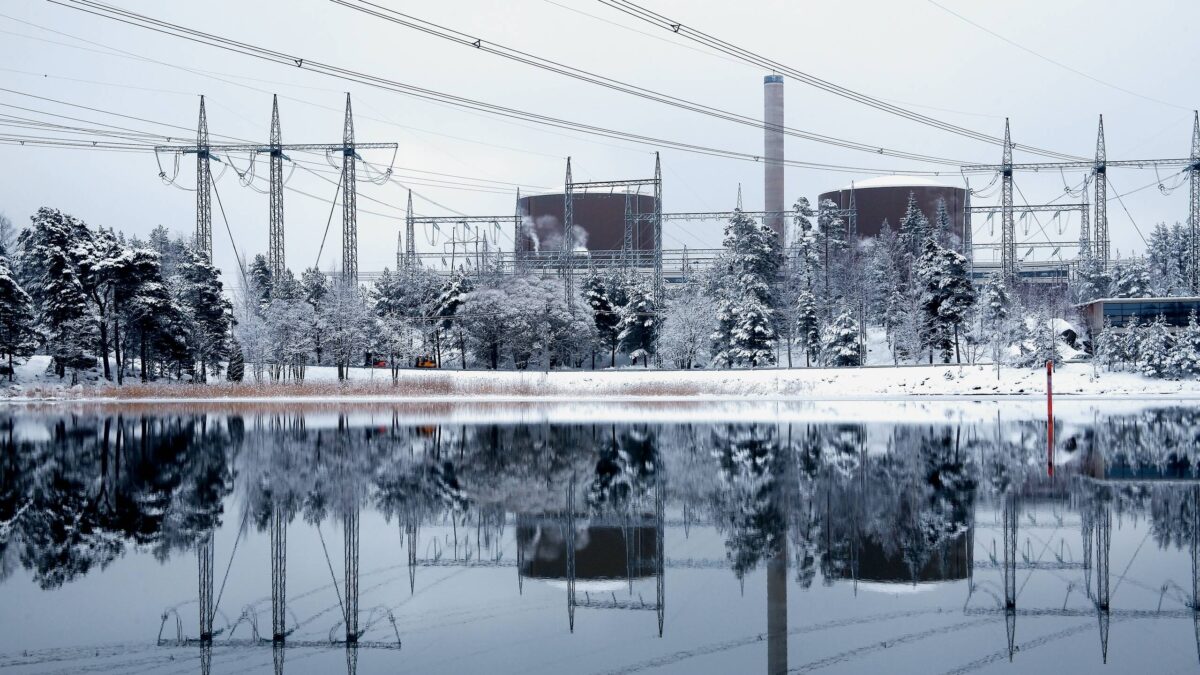
In September, Google announced its plan to invest €13 billion in Finland over the next two years and signed a 22-year agreement to purchase electricity from Fortum’s nuclear plant on Finland’s south coast. It is the first large-scale nuclear power purchase agreement (PPA) in the Nordics, and Google’s first PPA designed to extend the life of a nuclear plant. For more than two decades starting in 2028, Google will take up to half of the nuclear plant’s output. The partners are also working together on the development of new nuclear and renewables, flexibility solutions and energy portfolio management services.
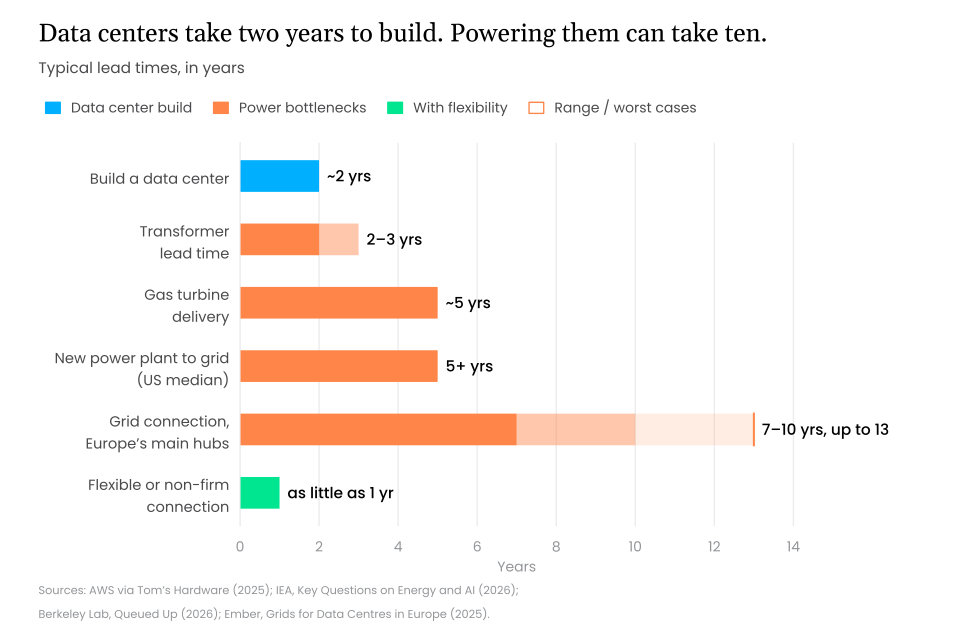
The deal is part of Google’s largest single investment in Europe and a major expansion of its data centers in Finland. It also reflects where AI is heading. While both chips and land can be procured relatively quickly, firm power commitments necessitate longer timelines and more complex, multi-stage processes. To address this binding constraint, AI leaders are working more closely and creatively with power producers.
Why Google Selected the Nordics
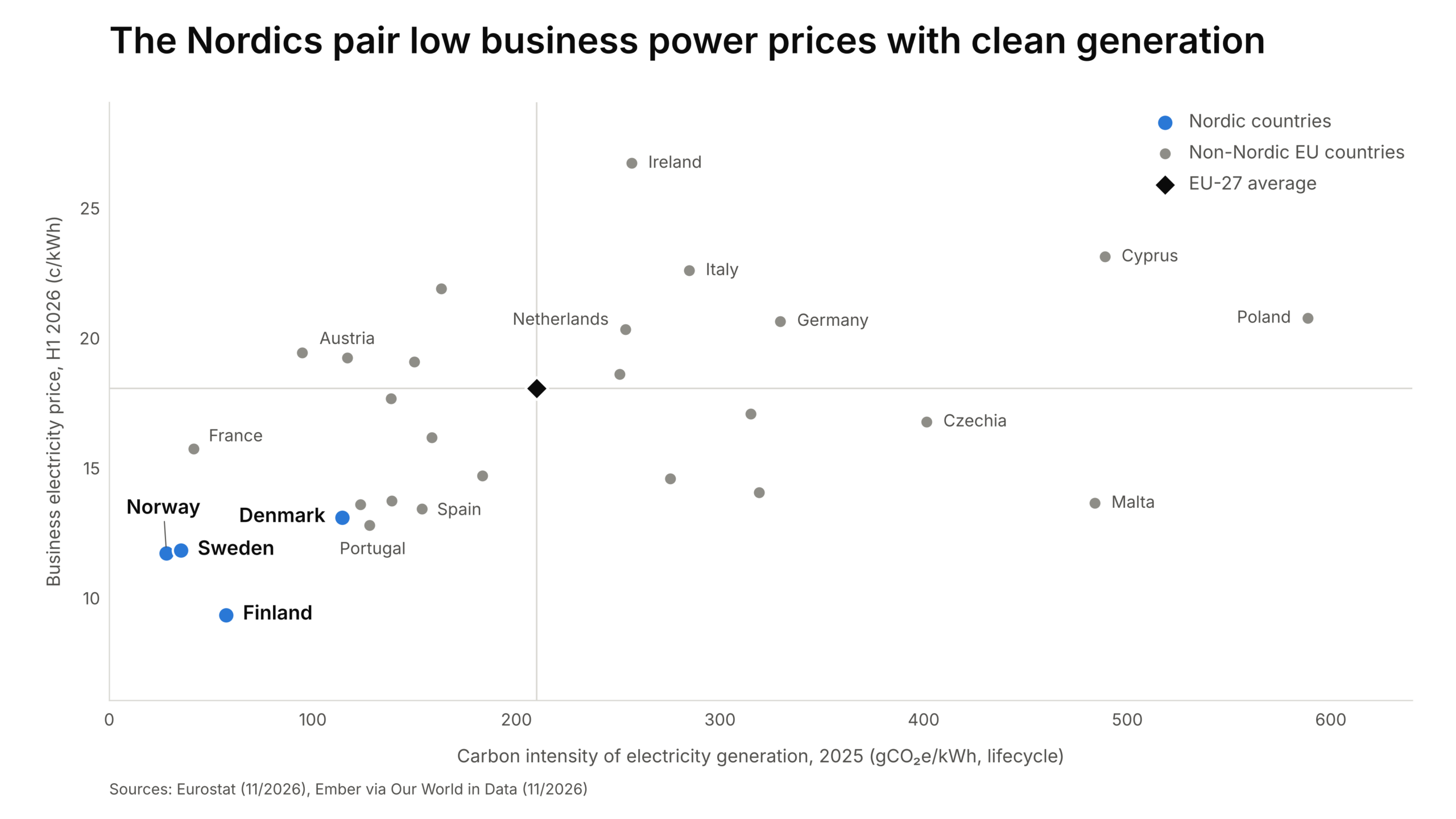
Google could have signed a nuclear PPA in many places. It chose the Nordics, and it is not alone. Hyperscalers and neoclouds are building across Finland, Sweden and Norway, and the region is fast becoming one of the most strategic places in the world for AI infrastructure.
According to Markus Rauramo, CEO of Fortum: “Google chose us because we have the most affordable prices and the lowest carbon emissions in Europe. This results from our energy mix of hydro, nuclear and renewables, with basically no fossil fuels. We also have large land areas that enable us to build more supply when power demand increases.”
The colder climate also reduces the energy needed for cooling, and from Arctic Norway to northern Finland, there is often more power available than the region can use.
The less obvious advantage lies in how much the Nordic system emphasizes efficiency and networked resources. The Nordics have a long tradition of regarding energy as shared infrastructure. Power markets are tightly connected across national borders and district heating networks are common in much of the region. In this system, a data center’s waste heat efficiently warms nearby homes instead of escaping into the outside air.
Near Helsinki, Fortum has already started up the heat plants that will recover waste heat from Microsoft’s new data centers, the world’s largest project of this kind. The same plants use electric boilers and heat storage to take in power when it is plentiful, which also helps balance the grid. In the Nordics, a data center becomes a contributing component to the system around it. When technology and energy companies work closely together, we can invest in and adapt systems to optimize physical capabilities, affordability, resiliency and time to power.
“Google chose us because we have the most affordable prices and the lowest carbon emissions in Europe. This results from our energy mix of hydro, nuclear and renewables, with basically no fossil fuels. We also have large land areas that enable us to build more supply when power demand increases.”
Markus Rauramo, CEO of Fortum
So Much More Than a PPA
The Google/Fortum PPA is historic on its own. It delivers a long-term buyer to an existing nuclear plant for its extended life, and offers Google access to firm, carbon-free, reliable power for decades to come. But perhaps the most interesting facet is the innovative flexibility initiatives accompanying the PPA.
Google and Fortum have agreed to work together on new power generation and flexible capacity, and to explore how Fortum’s portfolio management can support Google. The first step is a 94 MW battery that Google has contracted next to its new data center, which Fortum will optimize. Google is also working to enable its wind portfolio to take part in the markets that keep the grid balanced.
This changes the role that a data center plays on the grid. While it still draws a lot of power, it also brings storage, flexibility and steady long-term demand that help the grid run more effectively and efficiently. The battery is the linchpin, and the Google/Fortum partnership is crafted to then expand into new forms of generation, more flexibility and new business models for nuclear.
AI Infrastructure That Makes Existing Power Infrastructure More Resilient
AI is driving an unprecedented infrastructure buildout around the world. McKinsey forecasts that $7 trillion will flow into the data center value chain by the end of this decade. But data centers require power within a few years, while new grid connections, transmission lines and power plants often take a decade or more to build. As a result, many developers are aiming to bring their own power, deploy gas turbines on site and initially come online fully off the grid.
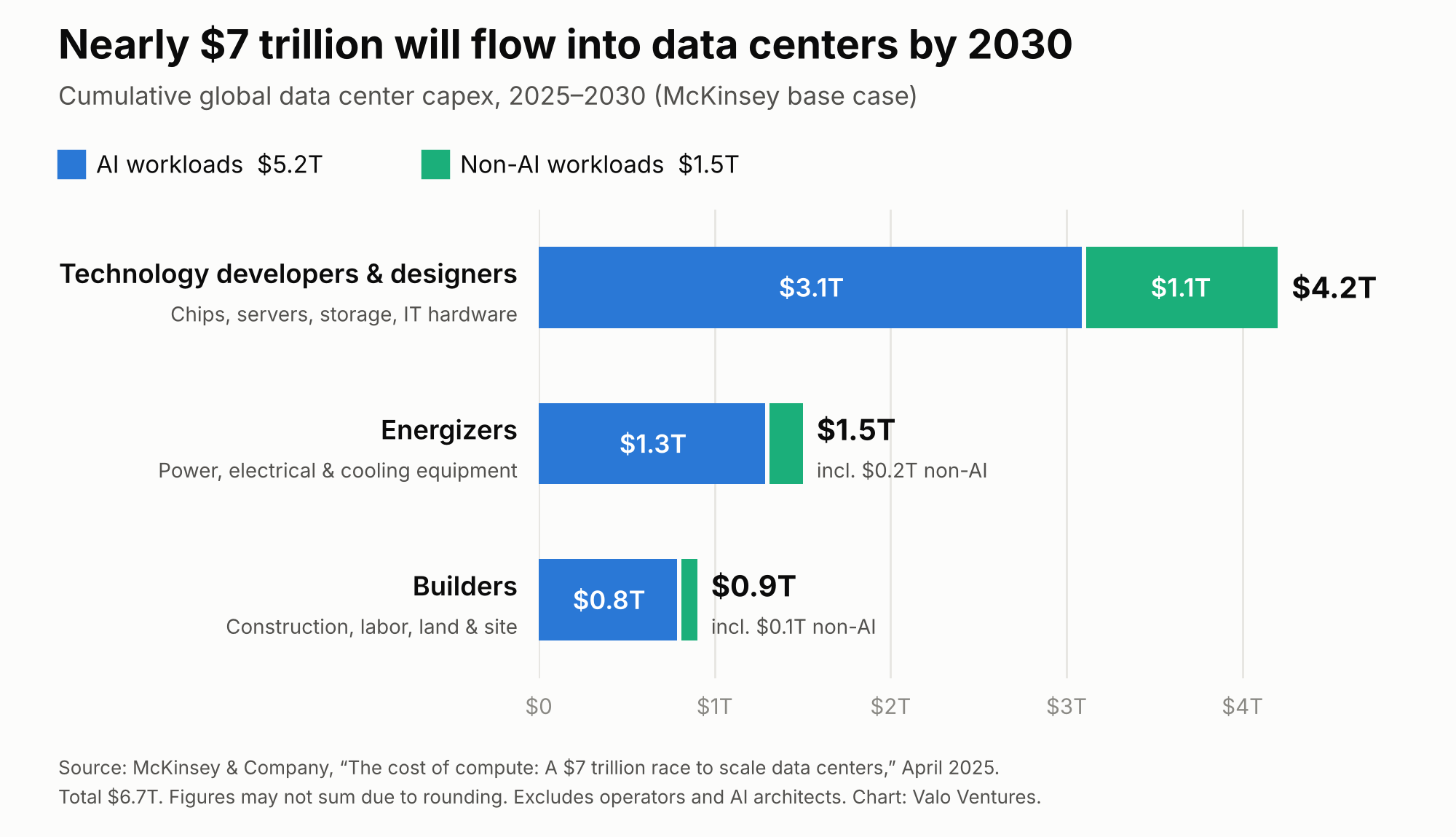
This off-grid architecture isolates the incremental demand and supply, and therefore the system does not experience the cost benefits derived from sharing fixed infrastructure over a larger customer base. It also sacrifices increased resiliency, flexibility and system decarbonization. As communities and regulators ask harder questions about what data centers give back to the places that host them, these considerations are elevated in importance.
The data center projects that last will be the ones that make the local power system stronger. In Google’s Finnish example, AI demand has created the case for retaining about 1 GW of firm, carbon-free capacity on the grid as Fortum extends the life of its Loviisa nuclear plant. The Google/Fortum PPA also enables a new 10 MW uprate at Loviisa, on top of the 38 MW already planned. Data-center demand is driving more output from existing assets, not just keeping them open. Google and Fortum have illustrated what best-in-class power development looks like.
Last week’s midterm elections made this tangible in the U.S. as well. Local data center restrictions passed in 44 of the 45 contests and utility commission races drew unusual attention against the backdrop of retail electricity prices rising 7.1% in 2025. Across the political spectrum the message was consistent: neighborhoods want data centers that pay their own way and strengthen the local grid. Long-term contracts that keep existing clean plants running, paired with batteries and flexibility that help balance the system, are an answer that travels well.
The data center projects that last will be the ones that make the local power system stronger. In Google’s Finnish example, AI demand has created the case for retaining about 1 GW of firm, carbon-free capacity on the grid as Fortum extends the life of its Loviisa nuclear plant.
Seeds of Innovation: Silicon Valley and Global Corporate Partnerships
Valo’s founding partner, Scott Tierney, worked at Google from 2011-2018, where he led acquisitions, co-founded CapitalG, and experienced Google’s approach to scaling innovation and rapid adoption of new technologies.
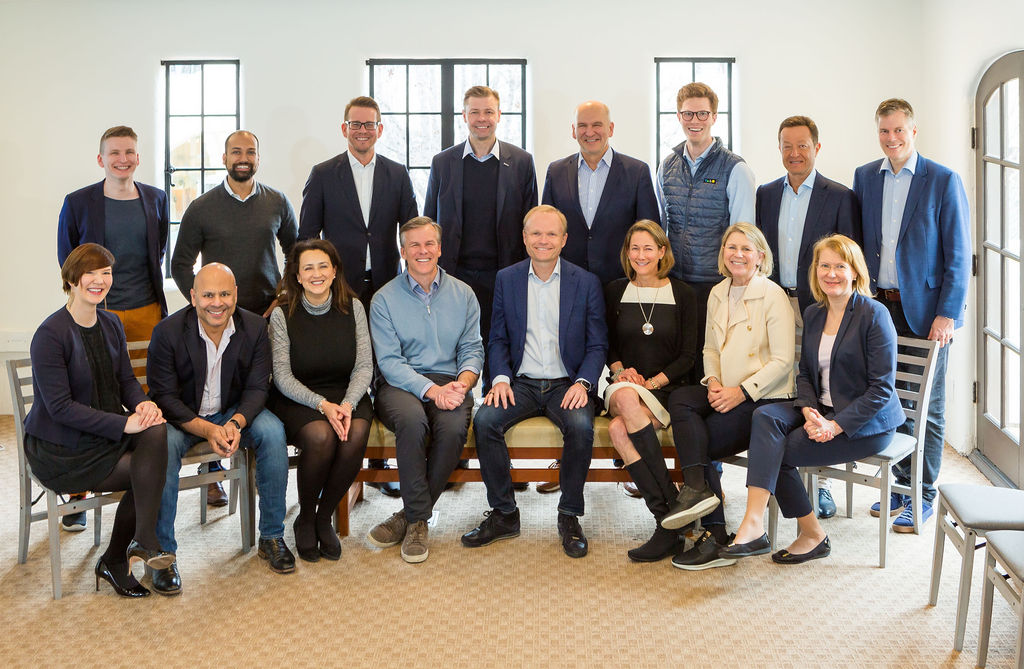
In 2018, Fortum’s CEO and executive team came to Palo Alto to meet with Scott. They designed a technology partnership inspired by Google and CapitalG’s playbook, which resulted in a cornerstone investment in Valo Ventures. It was only a decade earlier that Finland’s Nokia dominated the global handset market and then failed to respond to Apple’s creation of the smart phone. Fortum believed that a more direct connection with investors, startups and the corporations leading technology innovation in energy could meaningfully advance their business. Since then, the Google/Fortum/Valo collaboration has launched a number of innovative business and technology solutions.
Flexibility is one of the biggest ideas emerging from this collaboration. A battery next to a data center only creates value if someone runs it well, deciding hour by hour when to charge, when to discharge and which market to serve. The data center itself can become flexible too, by moving workloads that are not time-sensitive to hours when power is cheap and plentiful, or by storing its waste heat until the heat network needs it. All of this optimization requires software that can forecast, orchestrate and trade across power and heat markets, and hardware that can respond in seconds.
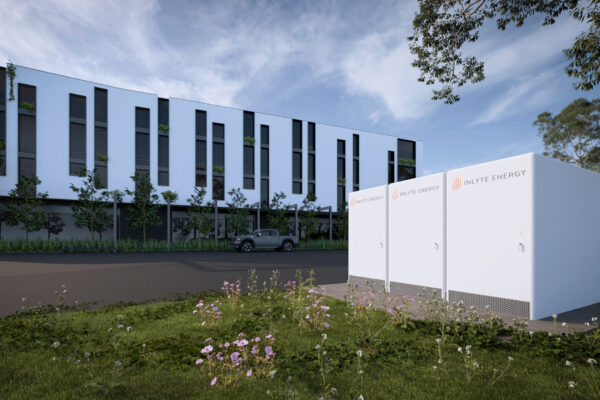
One of Valo’s portfolio companies, Inlyte Energy, is putting this into practice in a pilot project with Swiss data center operator NTS, where its batteries are set to back up the data center and help balance the grid. Flexibility like this makes the most of the power we already have, and new clean generation adds the capacity that AI’s growth demands. XGS Energy, another Valo portfolio company, is also responding to this demand by building next-generation geothermal for Meta in New Mexico. Once online, it will deliver firm, clean power to the grid serving Meta’s data centers, without using water to operate.
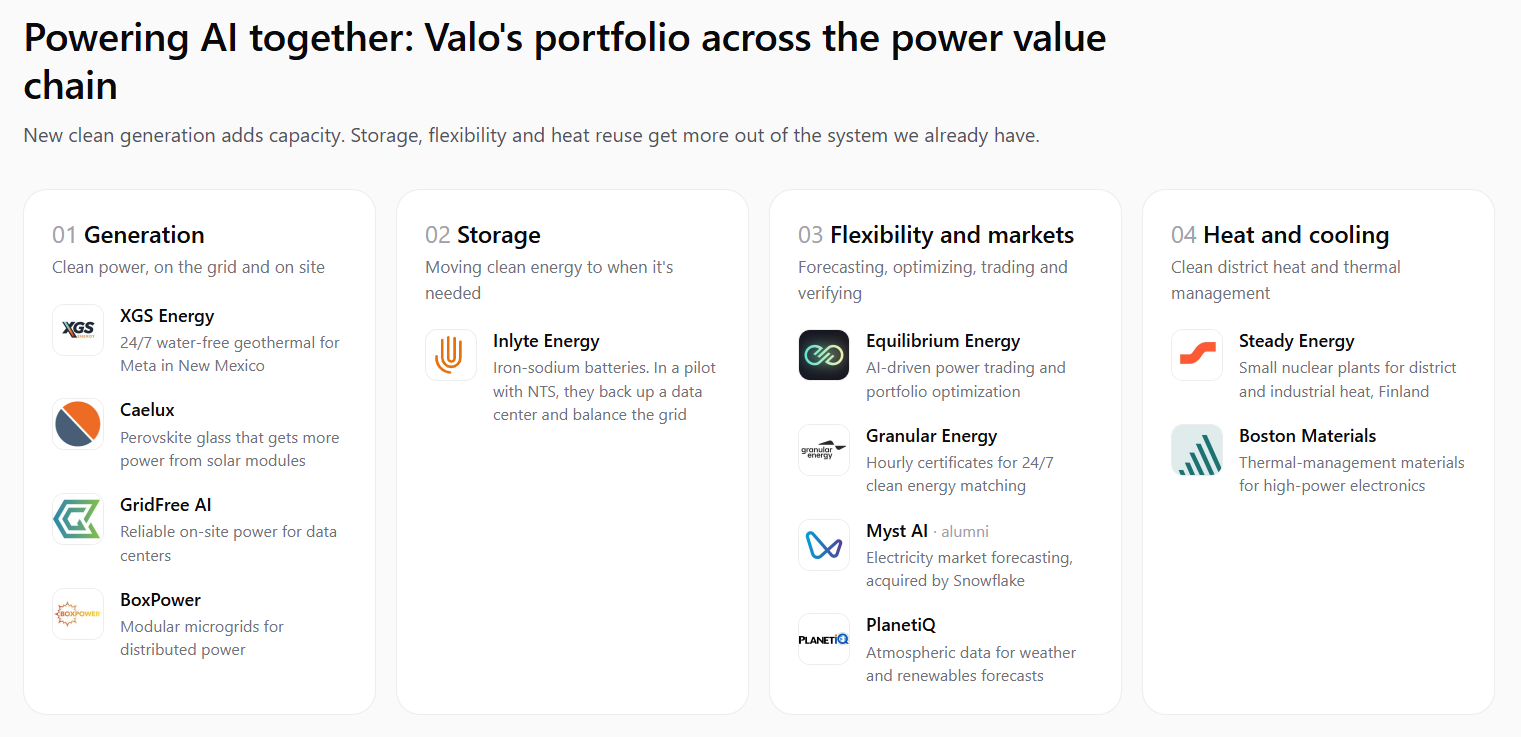
Valo’s eleven portfolio companies addressing the AI value chain also point to a bigger shift. For years, most of the value in tech was created in software. But AI has put physical limits back at the center of the problem set: power plants, grid connections, transformers and cooling units. Until new generation and transmission catch up—likely sometime in the 2030s—the industry will have to do more with what already exists. That favors technologies that get more out of today’s grid and find stranded capacity, as well as on-site power for data centers that cannot wait years for a grid connection. As inference grows, more AI will also run in smaller, more distributed data centers located closer to users, which exports the same needs to many more places.
It’s Essential That Incumbents Evolve and Innovate
Eight years after that first visit to Palo Alto, Fortum has dramatically evolved not only its innovation strategy but also its core product offering. Instead of selling 100% of its generation into the wholesale market, it now delivers complete energy solutions directly to customers like Google. This customer centricity illuminates clearer demand signals for clean, firm power generation, flexibility and the incentives to optimize them together. Digital tools make this possible by orchestrating plants, batteries and data centers so they can operate as a coordinated system.
An almost 100-year-old energy incumbent has notably increased its pace of innovation by directly collaborating with big tech, startups and investors. As AI develops exponentially, it challenges the energy system to keep pace. Fortum, Google and Valo are demonstrating the benefits of combining deep institutional knowledge with rapid iteration and bold vision.