
“We are at the intersection of three seismic shifts: an aging grid nearing obsolescence; unprecedented load growth from electrification, AI and industrial reshoring; and an alarming rise in extreme weather-driven disasters. Together, these trends are straining the centralized grid beyond its limits—delaying interconnections, driving up costs, and reducing reliability.”
~ Angelo Campus, Founder & CEO, BoxPower
Why We Invested in BoxPower
BoxPower sees the many forces challenging the grid clearly because the company has spent a decade deploying power systems in the field. It is evident that the U.S. won’t fix a structural problem by defaulting only to traditional solutions. BoxPower has built the standardized deployment platform that turns microgrids from one-off engineering projects into repeatable infrastructure, proven it with the most demanding utility customers in the country, and scaled into a market that’s finally catching up. Valo is backing Angelo and the BoxPower team because they’ve earned the trust of the hardest customers in energy, and have the rapid revenue growth to show for it.
The American electricity grid is fragile and outdated. Electricity demand is rising at its fastest pace in a generation, driven by the power demand from data centers, electrification, and industrial reshoring. But the grid was built in an era of centralized, one-way generation. It can’t scale fast enough to keep up. Billion-dollar, extreme weather events hit more than five times as often as they did in the 1980s (NOAA). Wildfires, which caused over $100 billion in damages in the January 2025 LA fires alone, are accelerating and extending well beyond the West Coast.
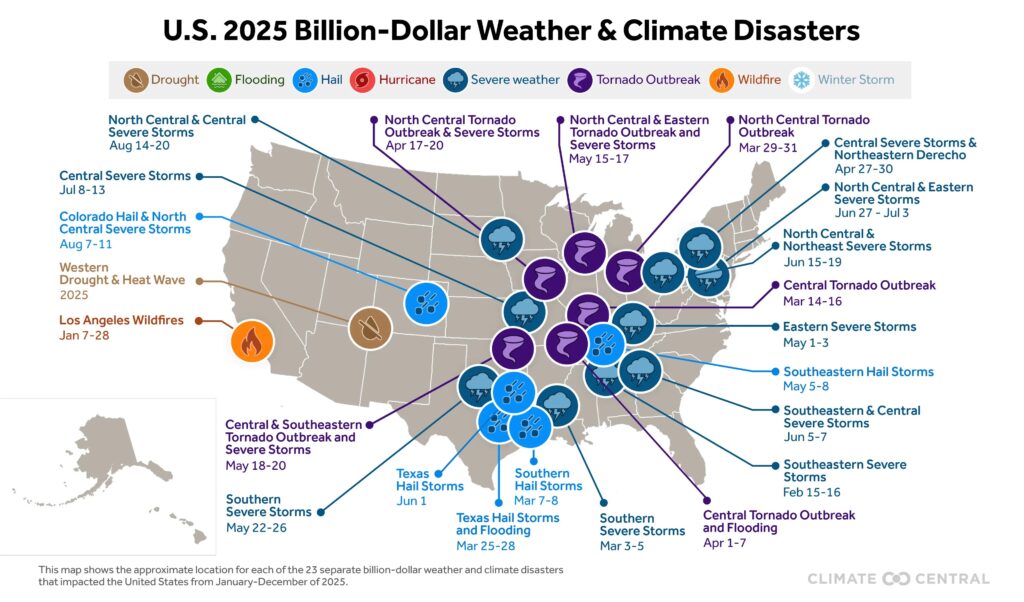
Source: Climate Central
With the cost of solar and battery storage each falling 90% since 2010 (IRENA), microgrids have gone from expensive remote backup power to cost-competitive alternatives to traditional grid infrastructure. California now requires utilities to justify grid hardening against the available alternatives. And for vulnerable lines, microgrids increasingly win (source). BoxPower is building the platform to deploy them at scale.
The Grid Is Under Stress: Microgrids Are a Cost-Effective Way to Create Stability
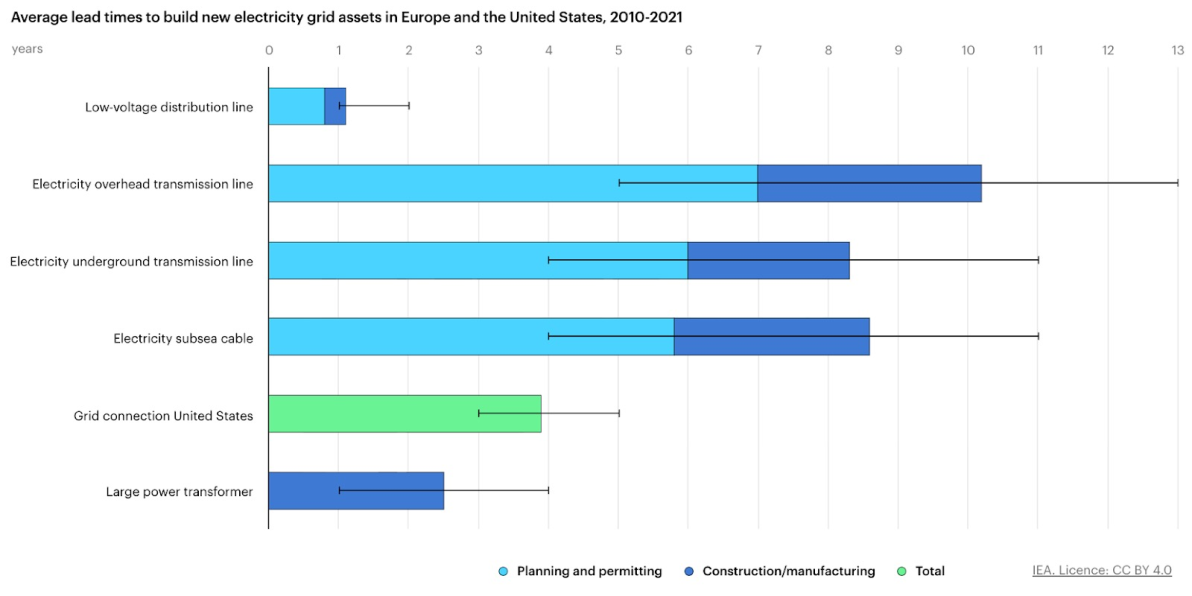
For decades, utilities responded to market pressures with a familiar playbook: build more poles, string more wire, bury more cable underground. 70% of the nation’s transmission and distribution lines are now over 50 years old and have already surpassed their design life span (American Society of Civil Engineers). Undergrounding costs $3–5 million per mile and overhead hardening runs up to $1 million per mile (Kimley Horn, Power Mag). BoxPower’s microgrids—which pair solar, battery storage, and backup power into self-contained power systems—offer a fundamentally different approach: clean, reliable, local power at a lower cost.
Dr. Sarah B. Kapnick, Global Head of Climate Advisory at J.P. Morgan, articulates this point clearly, “Distributed renewable microgrids are faster to deploy than single-site large-scale energy plants. And solar and battery storage microgrids can provide consumers steady power during larger-scale grid and energy transportation outages.”
Solving the Snowflake Problem
Microgrids have been technically feasible for years, but every project has been a snowflake: custom designed, custom procured, custom built — which can lead to suboptimal performance and reliability. That fragmentation makes deployments expensive, slow and hard to scale.
BoxPower was founded by Angelo Campus, who has dedicated his career to deploying microgrids in the field for more than a decade. Rather than raise before the market was ready, Angelo kept strengthening the product while solar and storage economics improved around him. BoxPower’s solution is a cost-effective, standardized product that delivers “five nines” utility-grade reliability.
BoxPower offers an end-to-end platform that spans the entire project lifecycle: design, procurement, construction, and long-term operations and maintenance. Their software automates site evaluation and system design, turning months of engineering into just days. Hardware ships in modular containers, configurable from 25kW to 20MW+, pre-engineered and pre-tested, at a fraction of what traditional infrastructure costs. The result is 50% lower engineering costs, timelines shortened by six months and guaranteed uptime.
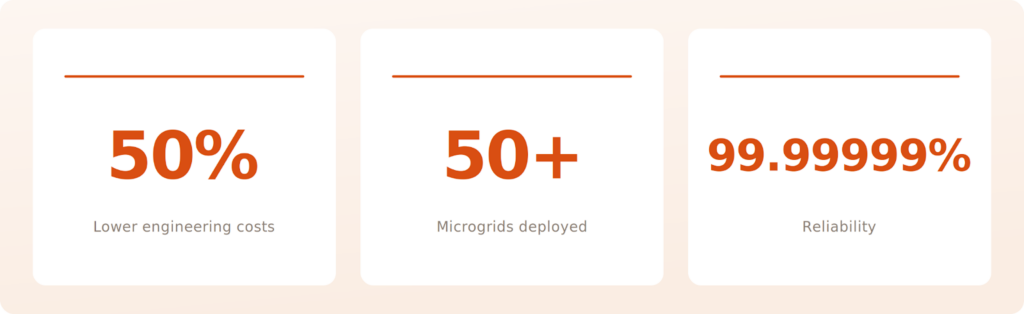
This is not a product looking for a market. BoxPower has deployed over 50 turnkey microgrid systems to date and has consistently doubled their installed capacity annually over the last four years. The same platform is capable of powering off-grid communities or plugging into the existing grid for flexible resilience and capacity. Few microgrid providers can deliver both modes from a single productized architecture.
Trusted by the Most Demanding Customers
Selling to investor-owned utilities is among the hardest sales motions in energy. Procurement cycles stretch for years, and once a utility commits to a vendor, the relationship is built on reliable, repeatable performance. BoxPower has broken through.
PG&E has built its remote grid program around BoxPower, deploying systems at over a dozen sites to replace aging overhead lines with standalone microgrids. Each deployment saves an average of $5 million per site compared to traditional distribution upgrades, while delivering superior reliability. PG&E has become a reference point that opens doors and proven microgrids as primary power. Southern California Edison, Liberty Utilities, and Avista have also selected BoxPower through competitive RFPs.
Microgrids are transitioning from being primarily a resilience play to being a capacity tool, delivering power where the grid simply can’t keep up. Utilities are already developing redeployable storage programs, which is precisely the architecture BoxPower has been building for years.
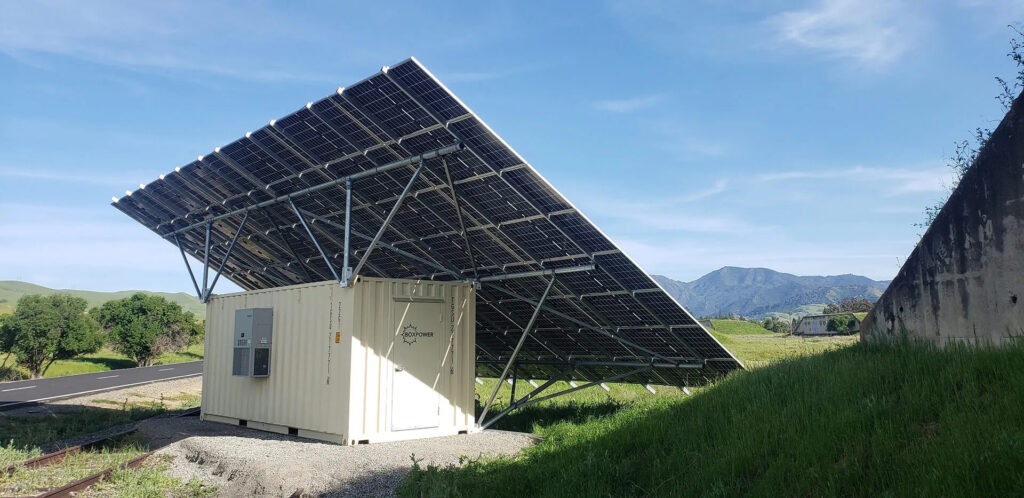
The same platform is driving BoxPower into new markets. Tribal governments, rural cooperatives, and critical infrastructure installations facing prolonged outage exposure continue to turn to BoxPower for primary or backup power. And behind-the-meter, rising commercial electricity rates combined with gridlock on interconnection are making onsite solar-plus-storage a favorable economic decision, drawing BoxPower into C&I applications as well.
Every use case—remote wildfire mitigation, capacity bridging, flexible interconnection—runs on the same platform. That is BoxPower’s structural advantage that enables scalability.
Built For What’s Coming Next
As electricity demand outpaces what centralized infrastructure can deliver, modular, utility-integrated microgrids offer a faster and more cost-effective path to resilience, capacity, and safety than traditional upgrades. The grid wasn’t designed for the challenges it now faces, and BoxPower’s standardized platform is addressing them by enabling standardized deployment of microgrids at scale.
If you are interested in Valo’s microgrid investment thesis or have ideas to help accelerate BoxPower’s impact, please reach out to sam@valoventures.org to start a conversation.